PU Leather vs. Microfiber Leather for Handbags: How to Choose by Handfeel, Finish & Performance
Start with PU when the design is led by a specific grain, color or finish. Include microfiber when abrasion, hydrolysis or shape retention is a priority. Compare shortlisted references on the same handbag part and approve what you can see and feel in the assembled sample.
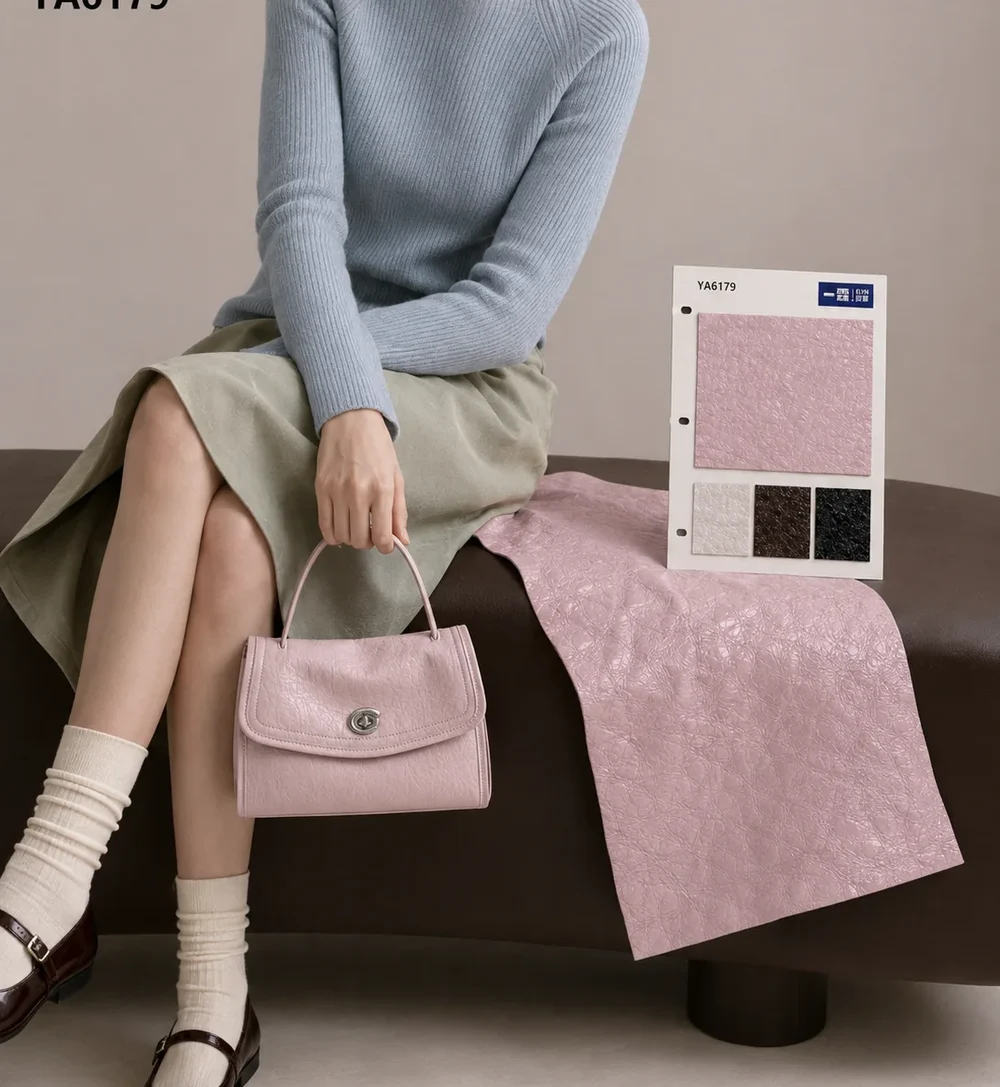
Give the two materials the same brief
Begin with a drawing of the bag and label the main panel, gusset, flap, base and strap. For each piece, write down what it should feel like, how much it should bend and where it will be handled or rubbed. A slouchy tote and a boxy crossbody may use the same grain direction in the design brief, while needing very different handling after the lining and interlining are added.
Then rank the needs. If the grain, sheen or color defines the design, start with regular or specialty PU options that meet the visual direction. If a panel takes repeated flex, a strap needs a particular feel, or a buyer specifies abrasion or hydrolysis checks, put suitable microfiber options beside them. Keep a PU reference in the comparison when it meets the brief. The category helps you build a shortlist. The selected reference and assembled part determine the choice.
| Question | Look at the sample | Check the reference |
|---|---|---|
| How should it feel? | Bend a front panel over the same reinforcement. Try the flap and handle with the same stitch stack. | Record thickness, backing and what each shortlisted cut feels like after assembly. |
| What does the surface need to do? | Review grain, sheen and color on a larger cut. Turn the piece under the approval light and compare edges. | Identify regular, specialty or laminated finishes by code and record any required color or grain changes. |
| Where will it wear? | Use the real fold, corner or contact point for a side-by-side room trial. | Share any abrasion, hydrolysis or flex method and pass criteria. Check documentation or discuss project testing. |
Use the hardest part to make the decision
Soft tote. A soft lychee or nappa-style PU surface is a place to start when drape and touch matter. Make the same gusset in two shortlisted materials. The preferred flat swatch may feel different once the edge is turned and the seam is stitched. Evaluate the bag loaded and unloaded with the same reinforcement so the sample review reflects expected use.
Structured crossbody. Make the flap and one corner in the same pattern and compare return after bending, stitch appearance and thickness at the edge. A structured bag can use different references for the body and the strap if the components have different priorities. Keep the body and trim next to each other under one light so differences in undertone and gloss are visible before you approve them.
High-contact pieces. Mark areas likely to take repeated rubbing or flex. Ask for the exact reference and material construction behind any test information. If a finishing change is proposed, ask whether the evidence still applies. Use the same label on the cut, trial piece and project documentation so you can trace the decision back to the material actually sampled.
What to include in the first sourcing email
- Product type, the parts you are selecting and what each part needs to do.
- Target thickness, stiffness or drape, plus surface color, grain and gloss.
- Required properties with any test method or pass criteria already set by the buyer.
- Preferred card codes or a reference image, the sample review date and what type of sample would help.
Record which option the team prefers and which questions the prototype still needs to answer. Agree on a retained physical reference before making a later color or finish change. The swatch-to-bulk guide explains what to keep for that second review.
Sampling questions
Which material should I start with for a soft tote?
Start with the handfeel and drape you want. Compare soft PU and any suitable microfiber using the same lining, reinforcement and seam. Choose using the assembled piece.
How can I compare performance fairly?
Compare exact references at the required thickness and specification. Use the same part, build and use condition. For reported performance, compare the test method, conditions and criteria.
Can a handbag use PU on one part and microfiber on another?
Yes, if that combination meets the design and handling brief. Sample the join, compare the faces together, and record the reference for each part.